
Every Batch Eurofins Tested | Free Shipping Rs.599+ | Launching India's first US manufactured TG form FISH OIL
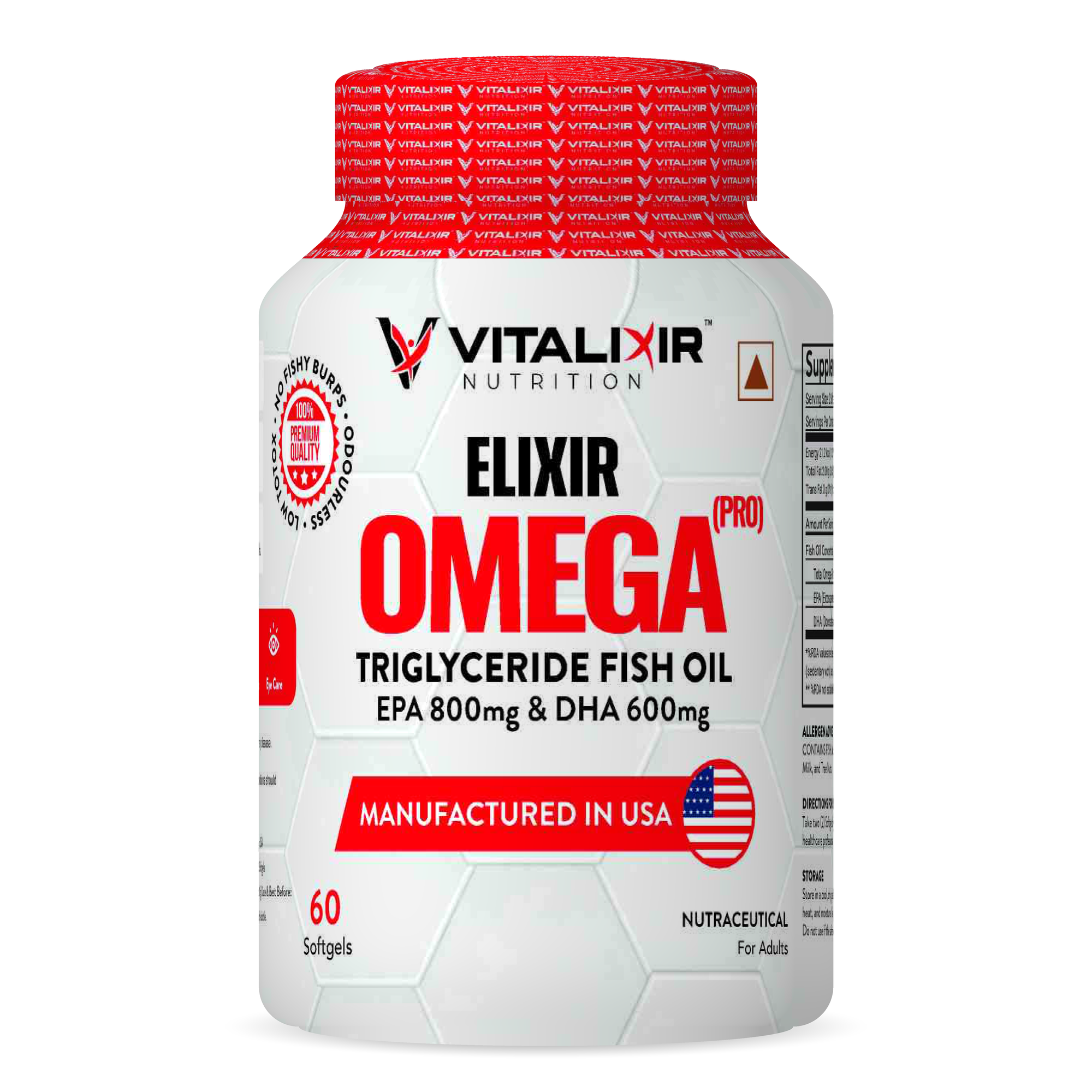

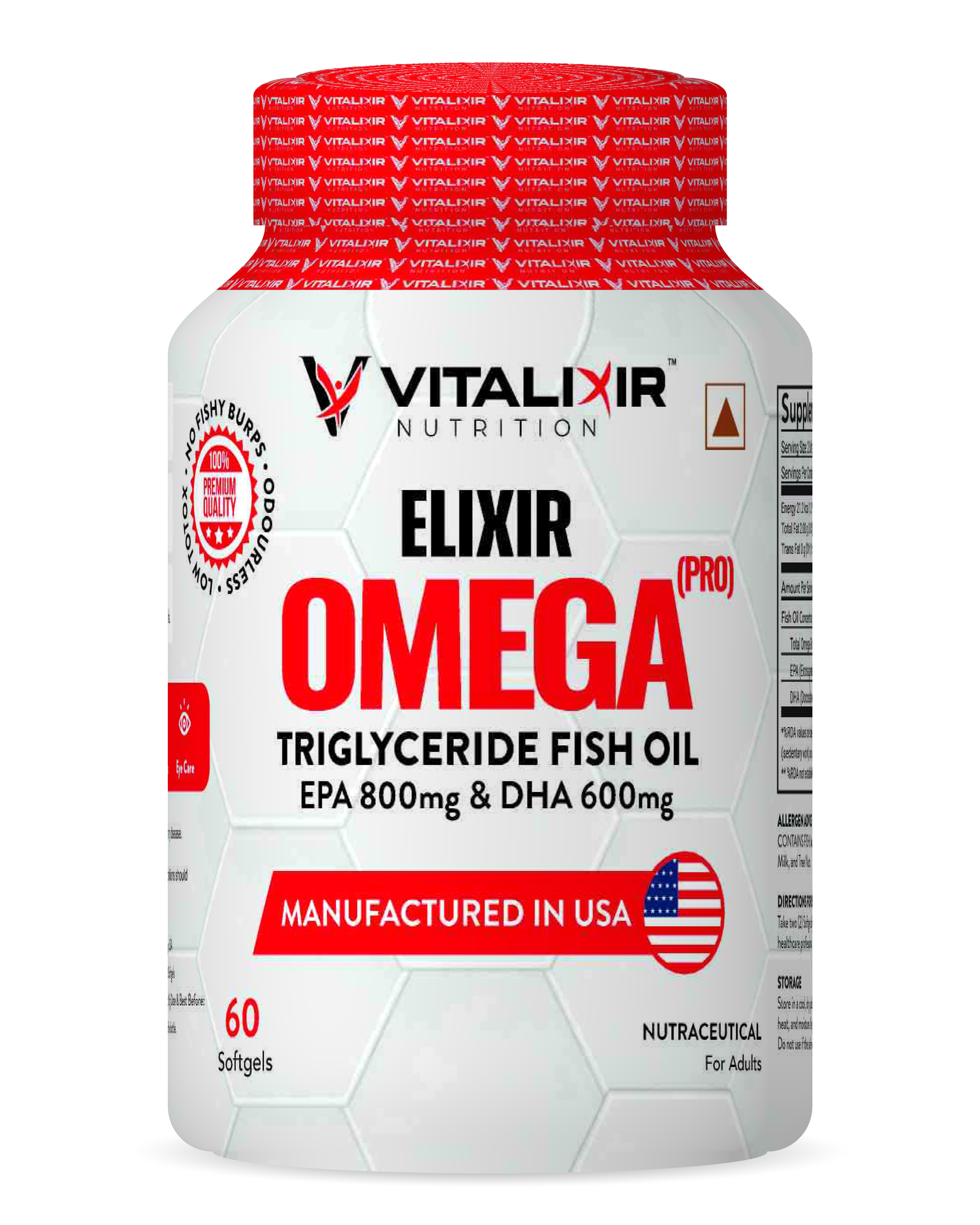
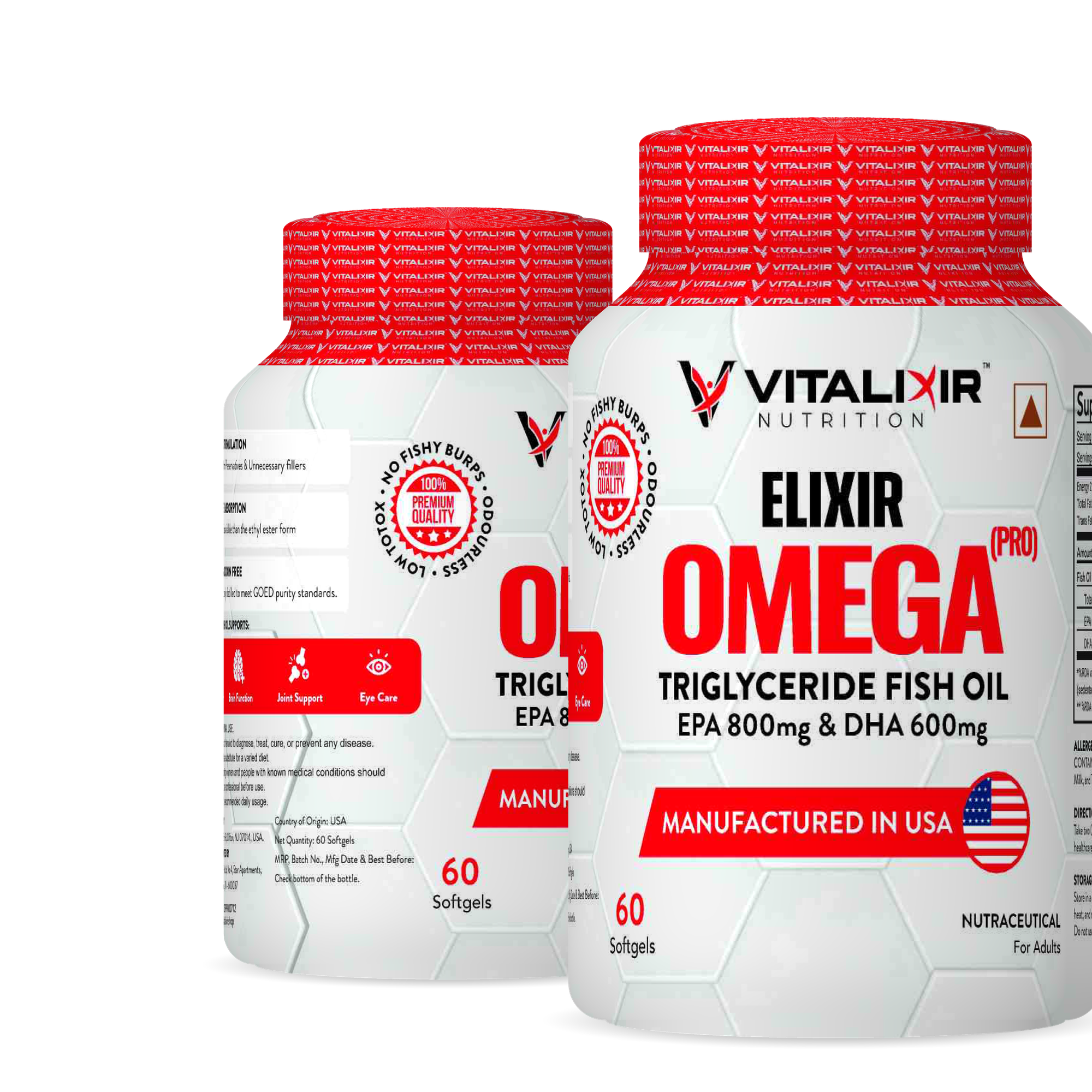
Elixir OMEGA PRO | Triglyceride Omega-3 Fish Oil | 1,400mg EPA+DHA | 60 Softgels
Original price was: ₹4,999.00.₹2,199.00Current price is: ₹2,199.00.
Elixir OMEGA PRO is a triglyceride-form deep sea fish oil concentrate, molecularly distilled and manufactured in a US FDA registered facility that is NSF certified to NSF/ANSI 455-2 for Dietary Supplements since 2022 — cGMP audited onsite by NSF International, with softgel and ingestible oil manufacturing inside the certified scope. Each 2-softgel serving delivers 1,400 mg of EPA + DHA — 800 mg EPA and 600 mg DHA — from 2,000 mg of fish oil concentrate that is 75–80% omega-3 by weight, not the 30% typical of standard 1,000 mg fish oil capsules. Triglyceride form is the form found in fish, and it is better absorbed than the cheaper ethyl ester form most Indian labels use without saying so. Sourced from anchovy, sardine and mackerel from North European waters. 60 softgels · 30 servings · Made in USA.
Elixir OMEGA PRO — Triglyceride-Form Omega-3
1,400 mg of EPA + DHA per serving, in the form your body actually absorbs.
Most omega-3 capsules sold in India are 1,000 mg of fish oil containing about 300 mg of omega-3 — roughly 30% active, and almost always in the cheaper ethyl ester form, which the label rarely mentions. Elixir OMEGA PRO is built the other way round: 2,000 mg of fish oil concentrate per serving that is 75% omega-3 by weight, in triglyceride form, molecularly distilled and manufactured in a US FDA registered and inspected facility.
Why triglyceride form matters
Omega-3 in whole fish exists as a triglyceride — three fatty acids attached to a glycerol backbone. To concentrate fish oil cheaply, most manufacturers convert it to an ethyl ester, which is a different molecule: the glycerol backbone is replaced with ethanol. Ethyl esters are cheaper to produce and more stable to handle, which is why they dominate the mass market.
Re-attaching the glycerol backbone — returning the oil to triglyceride form — is an extra manufacturing step that costs more. It is worth paying for: in a controlled human comparison, triglyceride-form formulations were absorbed substantially better than ethyl ester formulations at the same EPA + DHA dose (Dyerberg et al., 2010 — see The evidence below). Triglyceride form is also the form your digestive enzymes evolved to cleave, which is why it tends to sit more comfortably and produce less of the reflux and aftertaste associated with ethyl ester oils.
Very few Indian omega-3 labels state which form they use. We state it on the front of the pack.
What is in each serving
- 2,000 mg fish oil concentrate, triglyceride form
- 1,500 mg total omega-3 fatty acids as a label minimum — lot SGE20250176 tests at 1,596 mg, around 80% of the oil by weight
- 148 mg other omega-3 fatty acids beyond EPA and DHA on that lot — 1,596 mg total less 1,448 mg of EPA and DHA
- 800 mg EPA (eicosapentaenoic acid)
- 600 mg DHA (docosahexaenoic acid)
- 1,400 mg EPA + DHA combined, from 2 softgels
One serving is two softgels, so a bottle of 60 softgels is a 30-day supply.
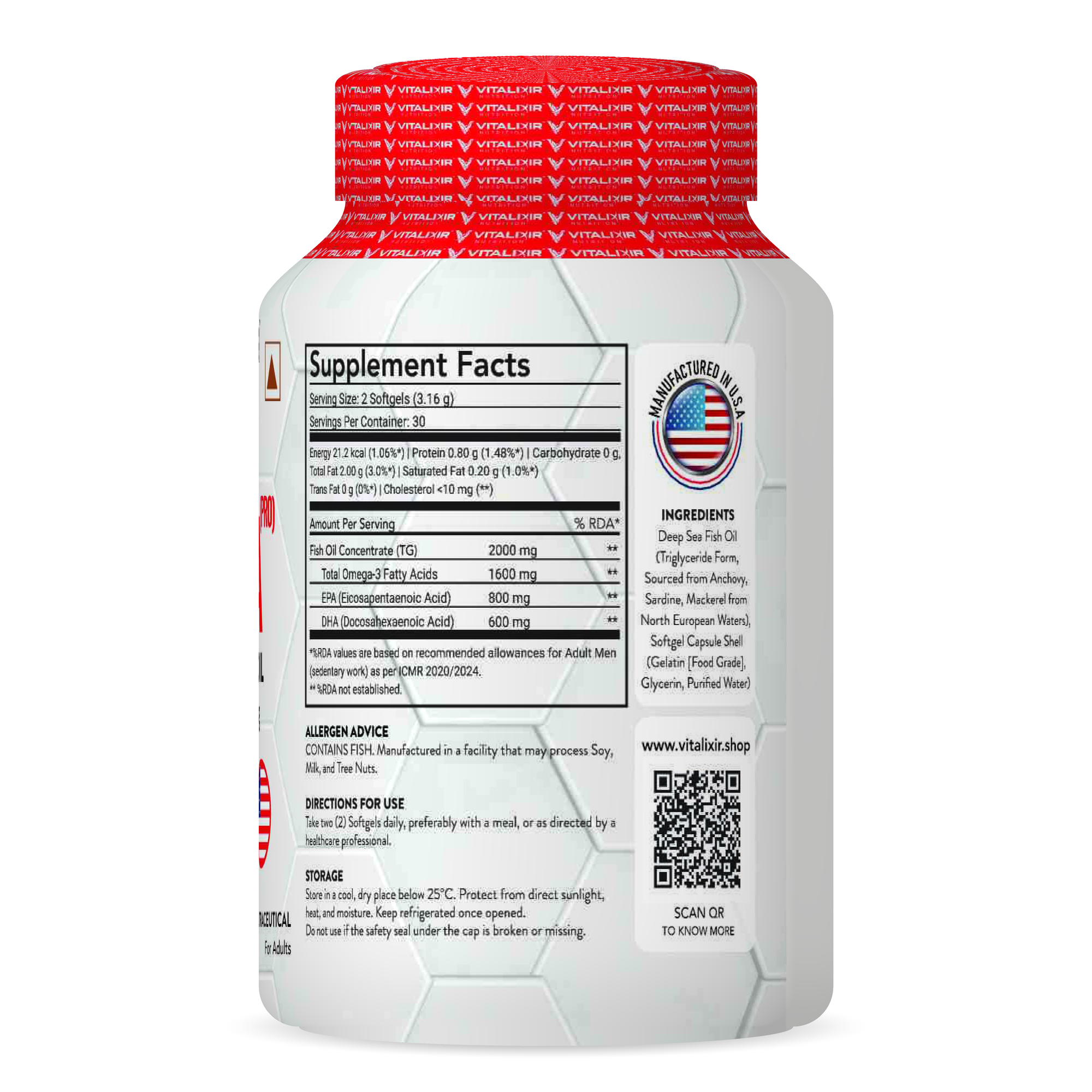
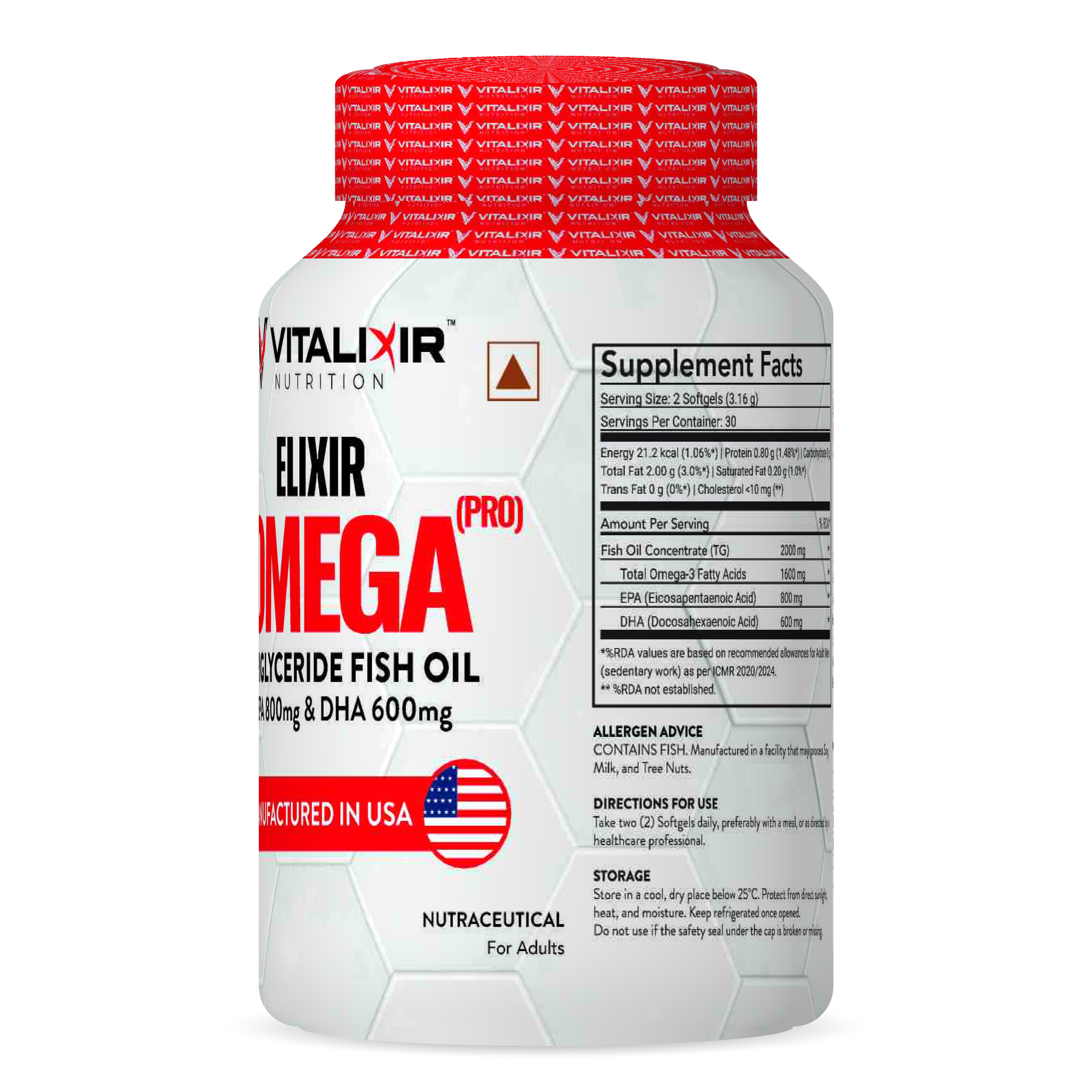
Supplement facts
| Serving size: 2 softgels (3.16 g) | Per serving | %RDA |
|---|---|---|
| Energy | 21.2 kcal | 1.06%* |
| Protein | 0.80 g | 1.48%* |
| Carbohydrate (total sugars 0 g, added sugars 0 g) | 0 g | ** |
| Total fat | 2.00 g | 3.0%* |
| Saturated fat | 0.20 g | 1.0%* |
| Trans fat | 0 g | 0%* |
| Cholesterol | <10 mg | ** |
| Sodium | 0 mg | 0%* |
| Fish oil concentrate (TG) | 2,000 mg | ** |
| Total omega-3 fatty acids | 1,500 mg | ** |
| EPA (eicosapentaenoic acid) | 800 mg | ** |
| DHA (docosahexaenoic acid) | 600 mg | ** |
Servings per container: 30. *%RDA values are based on recommended allowances for adult men (sedentary work) as per ICMR 2020/2024. **%RDA not established.
The panel above reproduces the declared label values, which are stated as minimums at end of shelf life. Lot SGE20250176 tests above every one of them: 820 mg EPA, 628 mg DHA and 1,596 mg total omega-3 per serving. See the Certificate of Analysis (PDF).
What a triglyceride-form fish oil supports
- Heart function — EPA and DHA are the long-chain omega-3 fatty acids most studied for normal cardiovascular function.
- Brain function — DHA is a major structural fatty acid of the brain and is concentrated in neural membranes.
- Joint support — EPA is the substrate for the body's own anti-inflammatory signalling pathways.
- Eye health — DHA is the single most abundant fatty acid in the retina.
This is a nutraceutical, not a medicine. It is not intended to diagnose, treat, cure or prevent any disease.
Where it is made, and how purity is controlled
Elixir OMEGA PRO is manufactured by Icelandirect, LLC, 93 Entin Road, Clifton, New Jersey 07014, USA, in a US FDA registered and inspected facility, and imported to India by Vitalixir Nutrisciences Pvt Ltd. Country of origin: USA.
That facility is NSF certified to NSF/ANSI 455-2 for Dietary Supplements — the internationally recognised GMP standard for supplement manufacturing — following an onsite audit by NSF International of its quality system and Good Manufacturing Practices, assessed against 21 CFR Part 111, the US FDA's cGMP regulation for dietary supplements. The certified scope covers softgel and ingestible oil manufacturing, encapsulation, and packaging and labelling operations — that is, the exact processes used to make this product, not an unrelated part of the plant.
The facility has held that certification continuously since July 2022, and is currently certified against the 2024 edition of the standard (certification C0690350-HSCDS-6). A single audit is a snapshot; four years of unbroken annual re-certification is a track record.
To be precise about what that means: it is the facility that holds NSF certification, not this individual product. There is no claim here that Elixir OMEGA PRO is an NSF Certified product — that is a separate programme we have not enrolled in.
The oil is molecularly distilled — a vacuum distillation step that separates the omega-3 fraction from the rest of the oil and removes heavier contaminants — and produced to GOED (Global Organization for EPA and DHA Omega-3) purity standards. Every lot arrives with a Certificate of Analysis covering heavy metals and oxidation markers — peroxide value, anisidine value and TOTOX, the numbers that actually determine whether a fish oil is fresh or turning rancid.
On lot SGE20250176 those come back well inside the GOED limits: peroxide value 4.0 (limit 5.0), anisidine value 2.0 (limit 20) and TOTOX 10.0 (limit 26). Lead, mercury, arsenic and cadmium all conform by ICP-MS, and the microbiological panel — total count, yeast and mould, E. coli, Salmonella, S. aureus — passes in full. Read it yourself: Certificate of Analysis 17100 (PDF).
Tested again in India, independently of the manufacturer
A certificate from the people who made the oil is a start, not a proof. Every consignment imported into India must also clear FSSAI import testing before it can be sold, and ours was tested by ALS Testing Services India, a NABL-accredited laboratory in Bangalore, across 255 parameters — 247 chemical and 8 microbiological. The verdict on the certificate is one word: Conforms.
| What was tested | Parameters | Result |
|---|---|---|
| Pesticide residues | 230 | none above the limit of quantification |
| Heavy metals and minerals | 7 | see below |
| Mycotoxins (aflatoxins B1, B2, G1, G2, total) | 5 | <0.5 µg/kg, not detected |
| Copper compounds | 4 | <0.05 mg/kg (limit 30) |
| Melamine | 1 | <0.10 mg/kg (limit 2.5) |
| Microbiology | 8 | see below |
Heavy metals — the numbers, not an assurance
This is the part most people actually want to know about a fish oil, so here it is in full, with the regulatory limit beside each result.
| Metal | Result | Permitted maximum |
|---|---|---|
| Lead (Pb) | 0.02 mg/kg | 2.5 mg/kg |
| Arsenic (As) | <0.01 mg/kg | 1.1 mg/kg |
| Cadmium (Cd) | <0.01 mg/kg | 1.5 mg/kg |
| Mercury (Hg) | <0.01 mg/kg | 1.0 mg/kg |
| Methyl mercury (as Hg) | <0.01 mg/kg | 0.25 mg/kg |
| Tin (Sn) | 0.09 mg/kg | 250 mg/kg |
| Copper (Cu) | <0.05 mg/kg | 30 mg/kg |
Lead came back at 0.02 mg/kg against a permitted 2.5 — about one one-hundred-and-twenty-fifth of the limit. Arsenic, cadmium, mercury and methyl mercury were all below the laboratory's limit of quantification, which is the lowest level the method can reliably measure.
Microbiology
| Organism | Result |
|---|---|
| Salmonella | Absent / 25 g |
| Escherichia coli | Absent / g |
| Shigella | Absent / 25 g |
| Staphylococcus aureus | <10 cfu/g |
| Coliforms | <10 cfu/g |
| Enterobacteriaceae | <10 cfu/g |
| Total plate count | <10 cfu/g |
| Total yeast and mould | <10 cfu/g |
The 230-pesticide panel covers the residues people recognise — DDT, lindane, endosulfan, chlordane, heptachlor, dieldrin, glyphosate, chlorpyrifos, malathion and monocrotophos among them. None was detected above the limit of quantification.
The complete report is published here: FSSAI import testing, ALS Testing Services India, certificate TIND218953-1 (PDF). Commercial values have been removed; every test result is untouched.
Ingredients
Deep Sea Fish Oil (Triglyceride Form, sourced from Anchovy, Sardine and Mackerel from North European waters), Softgel Capsule Shell (Gelatin [Food Grade], Glycerin, Purified Water).
Allergen advice: CONTAINS FISH. Manufactured in a facility that may also process soy, milk and tree nuts. This product carries the brown non-vegetarian mark.
How to take it
- Take two softgels daily, with a meal. Omega-3 is a fat and absorbs best alongside dietary fat. A meal containing some fat is the single easiest way to improve how much you actually absorb.
- Be consistent for at least 8–12 weeks. EPA and DHA incorporate into cell membranes gradually. Red blood cell omega-3 content takes roughly three months to plateau, so judge this on a season, not a week.
- Keep the bottle refrigerated once opened. Fish oil oxidises on exposure to heat, light and air. Refrigeration after opening is the simplest protection.
- Store unopened bottles below 25°C, away from direct sunlight and moisture. Do not use if the safety seal under the cap is broken or missing.
- Stack it sensibly. Omega-3 pairs well with the rest of a basic stack — see Magnesium Bisglycinate with BioPerine® and Elixir Whey protein.
A triglyceride-form, US-manufactured omega-3 concentrate, with the form and the numbers stated openly on the pack.
Frequently asked questions
Is Elixir OMEGA PRO triglyceride form or ethyl ester?
Triglyceride form. It is declared on the front of the pack and in the ingredient list as "Deep Sea Fish Oil (Triglyceride Form)". Most concentrated fish oils sold in India are ethyl esters, because the conversion to ethyl ester is the cheap way to raise concentration. Returning the oil to a triglyceride is an additional manufacturing step, and we pay for it because it is better absorbed.
What is the difference between triglyceride and ethyl ester omega-3?
In triglyceride form, EPA and DHA are attached to a glycerol backbone — the same molecular arrangement found in fish. In ethyl ester form, that backbone is replaced by an ethanol molecule during concentration. Ethyl esters are cheaper and more stable to process; triglycerides are absorbed better by the human gut and are the form pancreatic lipase is adapted to cleave. In a controlled human comparison, re-esterified triglyceride formulations showed substantially higher bioavailability than ethyl esters at an equal EPA + DHA dose.
How much EPA and DHA does each serving contain?
Each 2-softgel serving provides 800 mg EPA and 600 mg DHA — 1,400 mg of EPA + DHA combined, alongside other omega-3 fatty acids beyond EPA and DHA. Those are label minimums, and the oil tests higher: on lot SGE20250176 the Certificate of Analysis reports 410 mg EPA and 314 mg DHA per softgel — 820 mg EPA and 628 mg DHA per serving — and 1,596 mg total omega-3, which leaves 148 mg of other omega-3 fatty acids. Per softgel that is 400 mg EPA and 300 mg DHA.
How much omega-3 should an adult take per day?
For general adult health, FAO/WHO and EFSA both put the reference intake at around 250–500 mg of EPA + DHA per day, which most Indian diets do not reach without oily fish several times a week. Research examining higher intakes typically uses 1–2 g of EPA + DHA per day. One serving of Elixir OMEGA PRO provides 1,400 mg, which sits inside that higher research range. If you eat oily fish regularly or take other omega-3 products, count the total and speak to a healthcare professional before exceeding it.
Why 2,000 mg of fish oil instead of the usual 1,000 mg?
Because the number that matters is the omega-3 content, not the oil weight. A standard 1,000 mg fish oil capsule is about 30% omega-3, so it delivers roughly 300 mg. Elixir OMEGA PRO uses a concentrate that is 75–80% omega-3 by weight, so 2,000 mg of oil delivers a declared minimum of 1,500 mg of omega-3 and tests at 1,596 mg on lot SGE20250176. Reaching 1,400 mg of EPA + DHA from standard 30% fish oil would take four to five ordinary capsules.
Where is Elixir OMEGA PRO made?
It is manufactured in the USA by Icelandirect Inc., 93 Entin Road, Clifton, New Jersey 07014, in a US FDA registered and inspected facility, and imported and marketed in India by Vitalixir Nutrisciences Pvt Ltd, Chennai, under FSSAI licence 12425999000712. Country of origin on the pack is declared as USA.
Is Elixir OMEGA PRO made in an NSF certified facility?
Yes. Icelandirect, LLC has been NSF certified to NSF/ANSI 455-2 for Dietary Supplements continuously since July 2022, and is currently certified against the 2024 edition of that standard (certification C0690350-HSCDS-6). The certification follows an onsite NSF International audit of the plant's quality system and Good Manufacturing Practices, assessed against 21 CFR Part 111 — the FDA's cGMP regulation for supplements — along with 21 CFR Parts 117, 11, 1.5 Subpart L and 1.9 Subpart O. The certified scope includes softgel and ingestible oil manufacturing, so it covers how this product is actually made. Note the distinction: the facility is NSF certified. The product itself is not an NSF Certified product, which is a different NSF programme.
Is Elixir OMEGA PRO tested for mercury and heavy metals?
Yes, and the numbers are published rather than summarised. On the imported consignment, tested by NABL-accredited ALS Testing Services India: lead 0.02 mg/kg against a permitted 2.5, and arsenic, cadmium, mercury and methyl mercury all below the laboratory's limit of quantification. Tin came in at 0.09 mg/kg against a limit of 250, copper below 0.05 against 30. Heavy metals are the main reason people hesitate over fish oil, which is why we publish the figures and the full report rather than asking you to take our word.
Has this fish oil been tested in India, or only by the manufacturer?
Both. The manufacturer issues a Certificate of Analysis per lot, and separately every consignment imported into India must clear FSSAI import testing before it can be sold. Ours was tested by ALS Testing Services India in Bangalore across 255 parameters — 230 pesticide residues, 7 heavy metals and minerals, 5 mycotoxins, 4 copper compounds, melamine, and 8 microbiological parameters including Salmonella and E. coli, both absent. The analyst's conclusion is that the product conforms to the Food Safety and Standards (Health Supplements, Nutraceuticals, Food for Special Dietary Use…) Regulations, 2016.
Which fish is the oil sourced from?
Anchovy, sardine and mackerel from North European waters. These are small, short-lived, fast-reproducing pelagic species that sit low in the food chain, which is why they accumulate far less of the heavy metals and persistent contaminants that concentrate in large predatory fish such as tuna, shark and king mackerel.
Is the oil tested for purity, and can I see the report?
Yes, and you can read it right now — we publish it rather than making you ask. On lot SGE20250176 the Certificate of Analysis reports peroxide value 4.0 against a limit of 5.0, anisidine value 2.0 against 20, and TOTOX 10.0 against 26 — the three numbers that tell you whether a fish oil is fresh. Heavy metals (lead, mercury, arsenic, cadmium) conform by ICP-MS and the full microbiological panel passes. If you have a different lot number on your bottle, email cs@vitalixir.shop and we will send that lot's COA.
Will it cause fishy burps or an aftertaste?
It is much less likely to than an ethyl ester oil. Reflux and aftertaste are driven largely by oxidation and by the ethyl ester molecule itself. A fresh triglyceride-form oil — this lot tests at a TOTOX of 10.0 against a limit of 26 — taken with a meal and stored refrigerated after opening, is the combination that minimises it. In our pre-launch trial, users consistently reported no fishy burps or aftertaste, and found the softgels easy to swallow. If you do notice an aftertaste, take the softgels in the middle of a meal rather than before or after it.
Is Elixir OMEGA PRO vegetarian?
No. It contains fish oil and a food-grade gelatin softgel shell, and carries the brown non-vegetarian mark required under Indian labelling rules. If you need a vegetarian source of omega-3, an algal-oil DHA product is the category to look at — not this one.
How does omega-3 support heart function?
EPA and DHA are the two long-chain omega-3 fatty acids most extensively studied in relation to normal cardiovascular function, and they incorporate directly into cardiac and vascular cell membranes. Elixir OMEGA PRO is a food supplement intended to help you reach an adequate daily EPA and DHA intake. It is not a medicine and is not intended to diagnose, treat, cure or prevent any disease — if you are being treated for a heart condition, talk to your doctor before adding it.
Does omega-3 help with joint comfort?
EPA is the substrate from which the body produces its own resolvin and series-3 prostaglandin signalling molecules, which is the mechanism behind the research interest in omega-3 and joint comfort. Studies in this area generally use intakes in the 1–2 g EPA + DHA per day range, which one serving of Elixir OMEGA PRO falls within. This is a nutraceutical and makes no therapeutic claim.
Is DHA important for brain and eye health?
DHA is a major structural fatty acid in both tissues — it is a principal component of neuronal membranes and the single most abundant fatty acid in the retina. Each serving of Elixir OMEGA PRO provides 600 mg of DHA, a meaningfully higher amount than the 100–200 mg typical of standard 1,000 mg fish oil capsules.
How many softgels are in a bottle and how long does it last?
60 softgels, 30 servings — a one-month supply at the recommended two softgels per day. Net quantity is declared by number on the pack: 60 softgels.
How should it be stored?
Store unopened below 25°C, away from direct sunlight, heat and moisture, and keep it refrigerated once opened. Fish oil degrades on exposure to heat, light and oxygen, and refrigeration after opening is the single most effective thing you can do to keep it fresh. Do not use if the safety seal under the cap is broken or missing. Batch number, manufacturing date and best-before are printed on the bottom of the bottle.
Who should not take it?
Do not take it if you are allergic to fish. Pregnant or lactating women, anyone with a known medical condition, and anyone taking blood-thinning or antiplatelet medication should consult a healthcare professional before use, as should anyone scheduled for surgery. Do not exceed the recommended daily usage. Keep out of reach of children. Not for medicinal use, and not a substitute for a varied diet.
Can I take it alongside whey protein, creatine or magnesium?
Yes — there is no interaction, and omega-3 is one of the few supplements with a strong enough evidence base to belong in almost any stack. Many customers take it with Magnesium Bisglycinate with BioPerine® in the evening and ELIXIR CREA+ around training.
The evidence
Triglyceride form is better absorbed than ethyl ester
Claim: Triglyceride-form omega-3 is absorbed better than the ethyl ester form at an equal EPA + DHA dose.
Methodology: Randomised, double-blind human bioavailability trial comparing fish oil formulations — re-esterified triglyceride, ethyl ester, free fatty acid, and natural fish body oil — measuring the increase in EPA + DHA in plasma and red blood cell membranes over two weeks of supplementation.
Data source: Dyerberg J, Madsen P, Møller JM, Aardestrup I, Schmidt EB. "Bioavailability of marine n-3 fatty acid formulations." Prostaglandins, Leukotrienes and Essential Fatty Acids, 2010;83(3):137–141.
Date: Published 2010. Still the most frequently cited head-to-head comparison of omega-3 molecular forms.
Limitations: Small sample (72 participants) over a short period (two weeks). It establishes a difference in absorption between molecular forms; it does not establish any clinical outcome difference, and we make no such claim.
Contact: cs@vitalixir.shop
EPA, DHA and omega-3 content per serving
Claim: The label declares 800 mg EPA, 600 mg DHA and 1,500 mg total omega-3 per 2-softgel serving as minimums. Lot SGE20250176 tests at 820 mg EPA, 628 mg DHA and 1,596 mg total omega-3 per serving — around 80% omega-3 by weight — leaving 148 mg of other omega-3 fatty acids beyond EPA and DHA.
Methodology: Fatty acid profile by gas chromatography (GC) on the finished softgel, reported as mg per softgel in triglyceride form on the manufacturer's lot Certificate of Analysis. Label values are stated as minimums; the oil is molecularly distilled and identified in accordance with USP/EP standards.
Data source: Icelandirect, LLC Certificate of Analysis 17100, lot SGE20250176 (PDF), produced July 2025, signed by the Associate Director of Quality. Per softgel: EPA 410 mg against a 400 mg specification, DHA 314 mg against 300 mg, total omega-3 798 mg against 750 mg.
Date: Lot SGE20250176, produced July 2025, expiry July 2028. COA dated 11 July 2025.
Limitations: Fatty acid content is batch-specific and declared as a label minimum at end of shelf life, which is why the pack states 1,500 mg total omega-3 while lot SGE20250176 tests at 1,596 mg. The figures apply to the lot analysed and may differ on later lots, each of which carries its own COA; the supplement facts panel above reproduces the declared label values, not the batch result.
Contact: cs@vitalixir.shop
Manufacturing origin and facility status
Claim: Manufactured in the USA by Icelandirect, LLC in a US FDA registered and inspected facility; imported and marketed in India by Vitalixir Nutrisciences Pvt Ltd under FSSAI licence 12425999000712.
Methodology: Facility registration verified against the manufacturer's documentation; import endorsement held under the stated FSSAI licence.
Data source: Icelandirect, LLC, 93 Entin Road, Clifton, NJ 07014, USA. Vitalixir Nutrisciences Pvt Ltd import licence 12425999000712.
Date: Current as of October 2026.
Limitations: "US FDA registered and inspected facility" describes the manufacturing site's regulatory registration status. It is not an FDA endorsement, approval or evaluation of this product — the FDA does not approve dietary supplements.
Contact: cs@vitalixir.shop
NSF certification of the manufacturing facility
Claim: The manufacturing facility has been NSF certified to NSF/ANSI 455-2 for Dietary Supplements continuously since July 2022, currently against the 2024 edition, with a certified scope that includes softgel and ingestible oil manufacturing.
Methodology: Onsite audit by NSF International of the organisation's quality system and Good Manufacturing Practices, with annual re-certification. Normative reference standards assessed under the current certification: 21 CFR Part 111, 21 CFR Part 117, 21 CFR Part 11, 21 CFR Part 1.5 Subpart L and 21 CFR Part 1.9 Subpart O. The 2021-edition certificate was additionally issued under the Global Retailer & Manufacturer Alliance (GRMA) Certification Program v1.2 – Amendment 1, which also assessed the IPA Manufacturing Guideline.
Data source: Both certificates are issued to Icelandirect, LLC, 93 Entin Rd, Clifton, New Jersey 07014, USA, by NSF International, 789 N. Dixboro Road, Ann Arbor, Michigan, accreditation #0216, and both are published in full here:
- NSF/ANSI 455-2 – 2024, certification C0690350-HSCDS-6 (PDF) — initial certification 6 July 2022, valid to 6 May 2027
- NSF/ANSI 455-2 – 2021 GRMA Certificate of Conformance CERT-000497, audit AO-000913 (PDF) — valid to 21 May 2028
Current status is also independently verifiable through NSF's public certification directory, which is the authoritative source if either document here is out of date.
Date: Certified continuously since 6 July 2022. Current certification valid to 6 May 2027, subject to annual audit.
Limitations: This certification applies to the manufacturing facility, not to this individual product. Elixir OMEGA PRO is not an "NSF Certified" or "NSF Certified for Sport" product — those are separate NSF programmes covering product-level testing, and we make no such claim. The certificate also covers the facility's processes and quality system rather than the composition or purity of any particular batch; batch purity is addressed by the Certificate of Analysis above.
Contact: cs@vitalixir.shop
Purity and freshness testing
Claim: The oil is molecularly distilled and every lot carries a Certificate of Analysis covering heavy metals, oxidation markers and microbiology. On lot SGE20250176: peroxide value 4.0 (spec max 5.0), anisidine value 2.0 (max 20), TOTOX 10.0 (max 26).
Methodology: Heavy metals by ICP-MS; oxidation markers by the titrimetric and spectrophotometric methods specified in the GOED voluntary monograph.
Data source: Icelandirect, LLC Certificate of Analysis 17100, lot SGE20250176 (PDF); GOED Voluntary Monograph for EPA and DHA omega-3 oils. Methods as stated on the COA: AOCS for peroxide value and shell moisture, IMID115 for anisidine value, ICP-MS for heavy metals, USP <2021>/<2022> for microbiology, USP <2040> for rupture time.
Date: Lot SGE20250176, COA dated 11 July 2025.
Limitations: The COA covers heavy metals, oxidation and microbiology. It does not include PCB or dioxin assay results, so we make no PCB or dioxin claim on this page. The heavy metal results are reported as "Conforms" against each specification rather than as numeric values. We have requested the bulk oil contaminants report from the manufacturer and will publish it here when it is in hand. Results apply to the lot analysed; later lots carry their own COA.
Contact: cs@vitalixir.shop
FSSAI import testing by an accredited Indian laboratory
Claim: The imported consignment was tested across 255 parameters by a NABL-accredited Indian laboratory and found to conform to the applicable Indian regulations.
Methodology: Testing carried out under FSSAI's import clearance process, reported on Form–2 (Report of Laboratory Analysis) under regulation 10(5). 247 chemical parameters — 230 pesticide residues, 7 heavy metals and minerals, 5 mycotoxins, 4 copper compounds and melamine — plus 8 microbiological parameters in a separate report. Heavy metals by ICP-MS; microbiology by IS and ISO reference methods.
Data source: ALS Testing Services India Private Limited, Bangalore. Test certificate TIND218953-1-Final, ULR TC861726000037487F, dated 18 September 2026, signed by the Food Analyst. Published in full here: FSSAI import testing report (PDF).
Date: Sample received 12 September 2026; analysis completed 17–18 September 2026.
Limitations: This testing covers contaminants, residues and microbiology. It does not measure EPA and DHA content, which is covered by the manufacturer's Certificate of Analysis above, and it does not cover oxidation markers, PCBs or dioxins. The report records Lot/Batch as "N/A", so it is traceable to the imported consignment rather than to a printed lot number. FSSAI clears imports against standards; it does not approve or endorse products, and neither does the testing laboratory. Results apply to the sample analysed. Commercial values were removed from the published copy; no test result was altered.
Contact: cs@vitalixir.shop
Reference intakes for EPA and DHA
Claim: General-health reference intakes for EPA + DHA sit around 250–500 mg per day, while research examining higher intakes typically uses 1–2 g per day.
Methodology: Published dietary reference values and intake recommendations from international expert bodies.
Data source: FAO/WHO expert consultation on fats and fatty acids in human nutrition; EFSA adequate intake for EPA + DHA in adults (250 mg/day).
Date: FAO/WHO 2010; EFSA dietary reference values, current.
Limitations: Reference intakes apply to healthy adult populations and are not individual medical advice. Requirements vary with diet, body weight and health status. ICMR 2020/2024 allowances are used for the %RDA figures in the supplement facts panel.
Contact: cs@vitalixir.shop
Last updated: 15 October 2026
Reviews
There are no reviews yet